How Cheaper Home Batteries Program Works in NSW
Federal battery installation discounts and NSW VPP connection incentives are separate. Eligibility and amounts must be confirmed for your proposed installation and provider offer.
01
Eligible Battery Installations
Eligible solar battery installations may qualify for STC-based support through the federal Small-scale Renewable Energy Scheme. Calculations depend on eligible usable capacity, installation date and current rules.
02
STCs Convert to Real Savings
Certificate value may support an upfront discount by assigning the right to create STCs to a registered agent. Required customer information and signed documentation must be completed.
03
Your Discount Is Confirmed in Your Quote
Discounts and incentives depend on current scheme rules, eligible capacity, installation date and provider offer. We will confirm applicable amounts and conditions in writing.
04
Installation Date and Scheme Rules Matter
Support is calculated using the rules that apply to the installation date, eligible capacity and certificate value. We’ll confirm the calculation and amount payable before you proceed.
Your Benefits at a Glance
Federal support
May reduce eligible battery installation costs
VPP offer
Eligible connection incentive, subject to provider terms
Usage-based
Savings depend on tariffs, electricity use and operation
Site-specific
Payback depends on costs, savings and operating conditions
Who Can Claim the Cheaper Home Batteries Program?
A quick, easy checklist to confirm if you qualify for the national home battery discount.
01
Battery Requirements
The selected battery, usable capacity, approved equipment and installation configuration must meet the current federal program rules. We’ll assess the exact product and installation before confirming eligibility.
02
Property Requirements
Eligibility depends on the property, existing or new solar system, battery configuration and any previous battery support at the premises. We’ll check the proposed installation against current requirements.
03
Installer Requirements
The installation must meet the program’s current installer, electrical safety, testing, certification and installation-date requirements. Required records must be completed before support is confirmed.
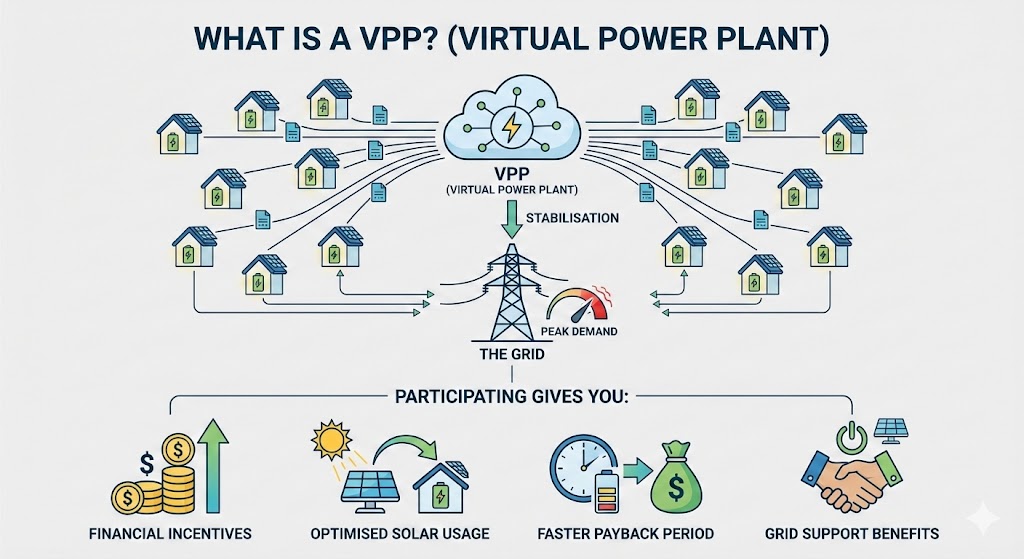
What is a VPP?
A Virtual Power Plant links thousands of home batteries so they can support the grid when it’s under stress.
During peak demand, small amounts of energy from connected batteries stabilise the grid — and you get rewarded.
How NSW VPP Incentives Work Under the PDRS Scheme
A simple breakdown of how the Peak Demand Reduction Scheme (PDRS) rewards households and small businesses for supporting the grid during peak demand.
01
Your Battery Reduces Peak Demand
When your battery is connected to an approved VPP, it can discharge small amounts of energy during peak periods. This reduces the overall demand on the grid.
02
Peak Reduction Certificates Are Created
For eligible PDRS VPP activities, the relevant Accredited Certificate Provider (ACP) calculates and creates Peak Reduction Certificates (PRCs) under the applicable scheme method. A simple per-event kW formula does not determine a customer’s incentive.
03
PRCs Are Traded by Accredited Providers
Sufficient Energy is not an ACP. The relevant ACP is responsible for certificate creation and scheme processing. We assist with customer information and installation coordination within our agreed role. The applicable ACP and provider arrangement must be confirmed before you proceed.
04
Eligible VPP Connection Incentive
Where eligible, the participating provider’s offer will specify the incentive amount, payment method, timing and conditions. This is separate from the federal battery installation discount.
Explore Your VPP Options
Ask us about compatibility, provider terms and any eligible connection incentive. Required customer information, eligibility checks and signed documentation apply. No incentive or payback period is guaranteed.
Frequently Asked Questions
Find answers to commonly asked questions about NSW Battery Incentives.
How are battery discounts and VPP incentives delivered?
Federal installation support may be applied as an upfront discount through an STC assignment arrangement. A separate NSW VPP incentive is delivered under the participating provider’s offer, which specifies payment method, timing and conditions.
Do I need to have solar installed to qualify?
Federal solar battery support and NSW VPP incentives have separate eligibility requirements. We’ll check your solar and battery configuration against the applicable current rules before confirming any offer.
Could my existing battery qualify for a VPP connection incentive?
Potentially. Eligibility depends on the current PDRS activity, the battery and solar configuration, warranty requirements and the participating provider’s offer. An existing battery does not automatically qualify.
How much support could I receive?
Discounts and incentives depend on current scheme rules, eligible capacity, installation date and provider offer. We will confirm applicable amounts and conditions in writing.
How is eligibility assessed?
Eligibility must be assessed separately under the federal battery program and any NSW VPP offer. We’ll explain the applicable customer, property, product and installation requirements before you proceed.
How do STCs affect my battery installation cost?
Eligible installations may qualify for an upfront federal discount through an STC assignment arrangement. The amount depends on eligible usable capacity, installation date, the applicable STC calculation and certificate value. Your quote will show the applicable discount and amount payable.
What is a Peak Reduction Certificate (PRC)?
PRCs are certificates created by an ACP for eligible peak demand reduction activities under the applicable PDRS calculation method. Your VPP incentive depends on the provider’s written offer and conditions, rather than a simple per-event formula.
What’s the first step?
Contact us on +61 433 794 464 to discuss your proposed installation or existing battery. We’ll arrange an assessment and confirm any applicable discount, provider offer, documentation and installation requirements in writing.
Contact Us
Enquiry privacy notice: Sufficient Energy uses the details you submit to respond to this specific enquiry. Any required sharing with installation or scheme providers will be explained before you proceed. Submitting this enquiry does not provide consent to unrelated future marketing. For privacy questions, contact info@sufficientenergy.com.au.